From Ocean to Tap: How Desalination Works
Intake & Pretreatment

Seawater is drawn from the Pacific Ocean through screened intake systems that reduce impacts on marine life. The water then passes through a series of pretreatment filters, removing sand, sediment, and other particles. This step prepares the seawater for the reverse osmosis process while protecting sensitive membranes from damage.
Reverse Osmosis & Purification
At the heart of the process is reverse osmosis technology. Seawater is pushed through semi-permeable membranes that remove salt and impurities at the molecular level. The result is pure, high-quality drinking water. Advanced monitoring ensures each stage meets rigorous safety and quality standards.
Delivery & Reliability
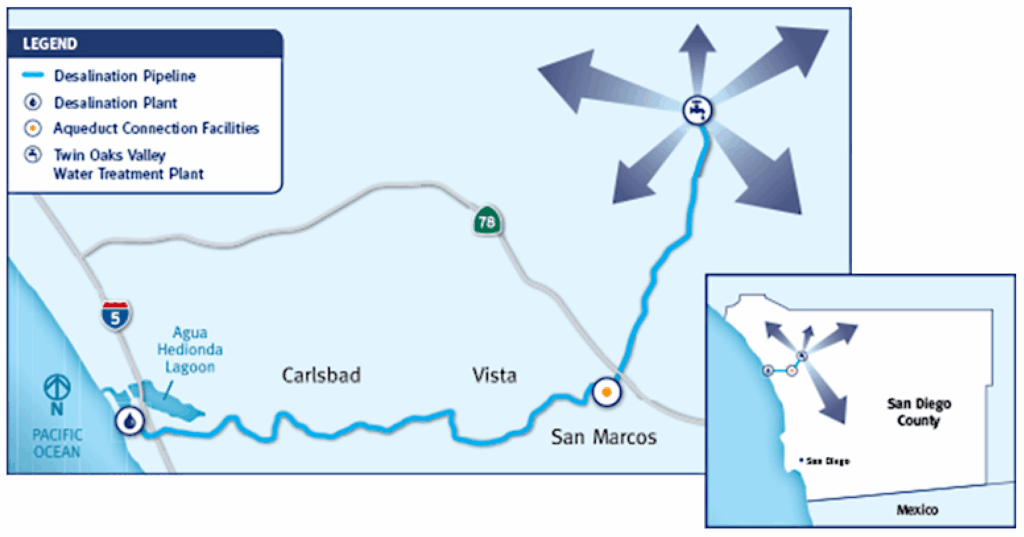
Once purified, the water flows into a 10-mile pipeline that connects directly to the San Diego regional water system. This ensures a steady supply for nearly 400,000 residents. Continuous monitoring and energy recovery systems keep the process efficient, sustainable, and reliable around the clock.
The Process at a Glance:
Seawater Intake: Drawn through screened systems to protect marine life
Pretreatment: Filters remove sand, sediment, and particles
Reverse Osmosis: Membranes separate salt and impurities from fresh water
Post-Treatment: Minerals are added for taste and health standards
Distribution: A 10-mile pipeline delivers safe drinking water to the community
Pretreatment
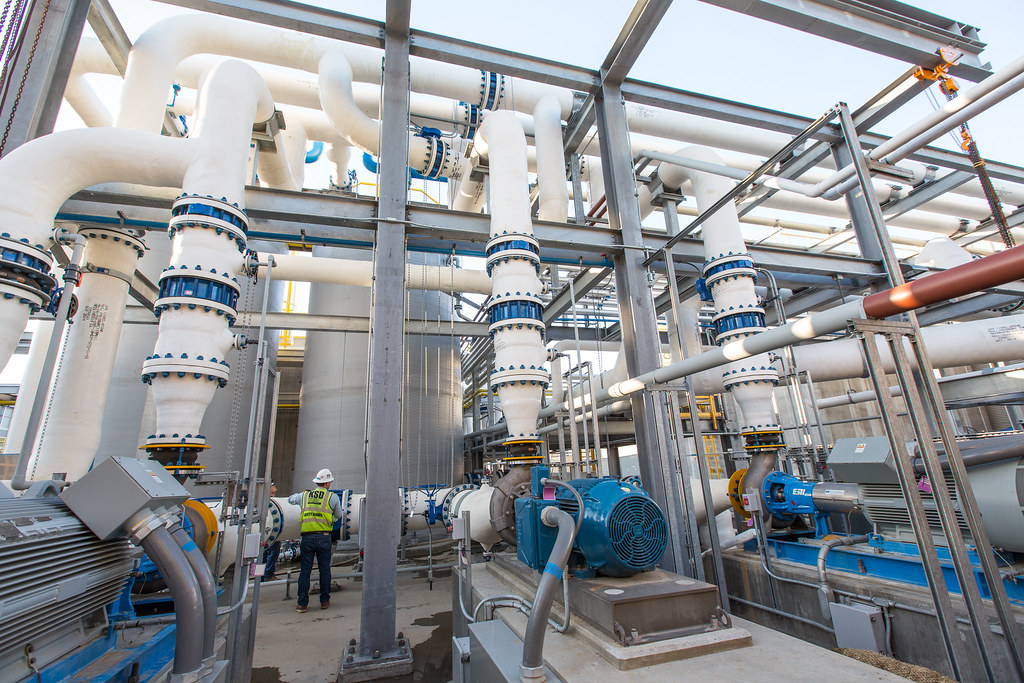
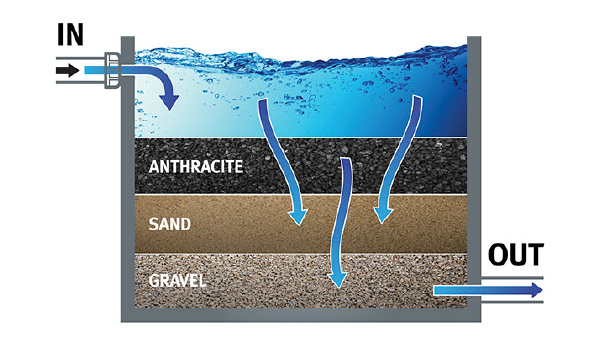
Pretreatment is the first stage of the desalination process. When seawater arrives at the plant, it goes through a pretreatment process to remove algae, organic materials and other particles. Seawater is pumped into multimedia filter tanks, which include layers of anthracite and sand atop a bed of gravel. Once filtered, the water moves into the next stage of desalination.
01.
02.
Secondary Pretreatment
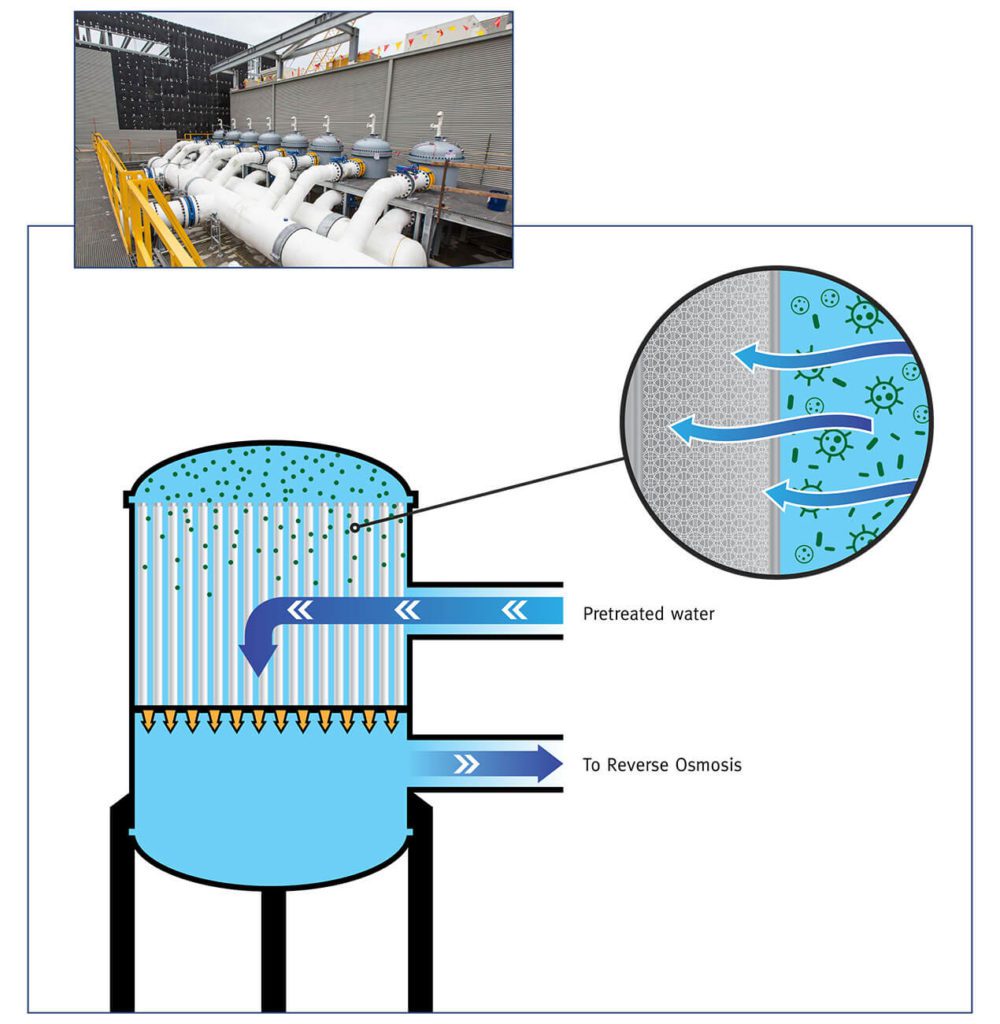
Before seawater enters the reverse osmosis filters to remove the salt particles, it must go through a second stage of pretreatment called microfiltration to remove smaller – oftentimes microscopic – impurities. At this point, virtually all impurities other than dissolved salts and minerals have been removed from the water, but one more step still needs to be taken to remove the dissolved salts and minerals to be ready for drinking.
Reverse Osmosis Building – The “Heart” of the Plant
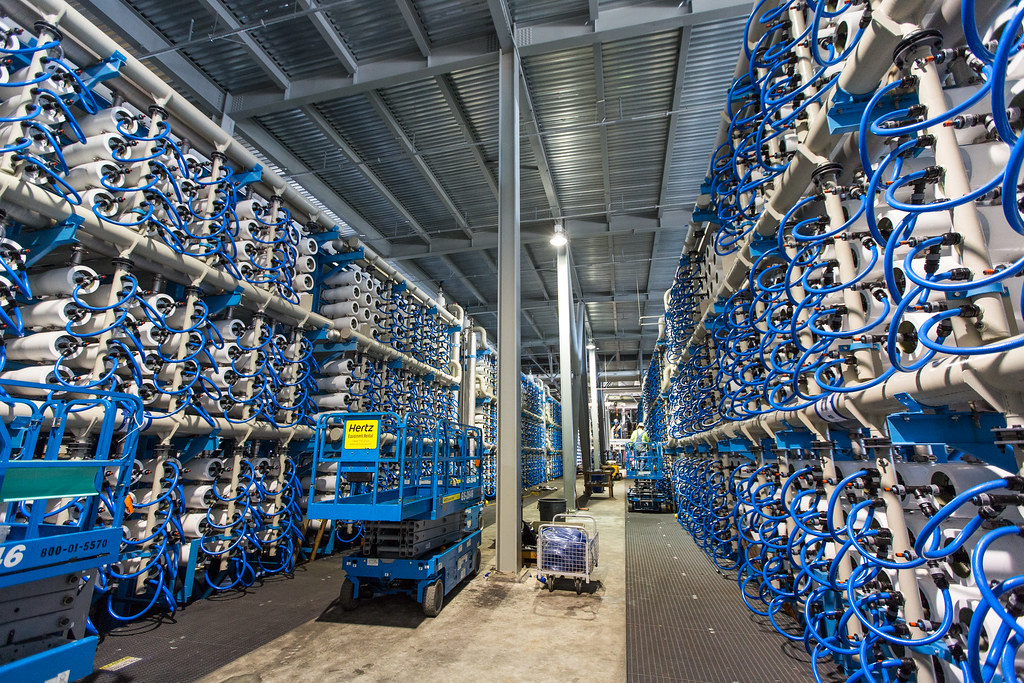
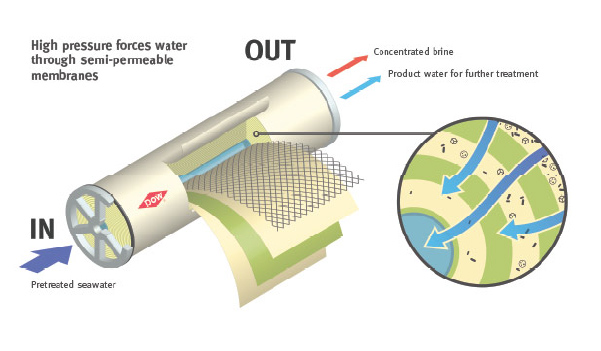
The reverse osmosis building is the center of the desalination process, and the Carlsbad Desalination Plant. During this process, dissolved salt and other minerals are separated from the water, making it fit for consumption. The reverse osmosis building contains more than 2,000 pressure vessels housing more than 16,000 reverse osmosis membranes. The pressure vessels were provided by San Diego County-based Protec Arisawa, and Dow Water & Process Solutions produced the reverse osmosis membranes.
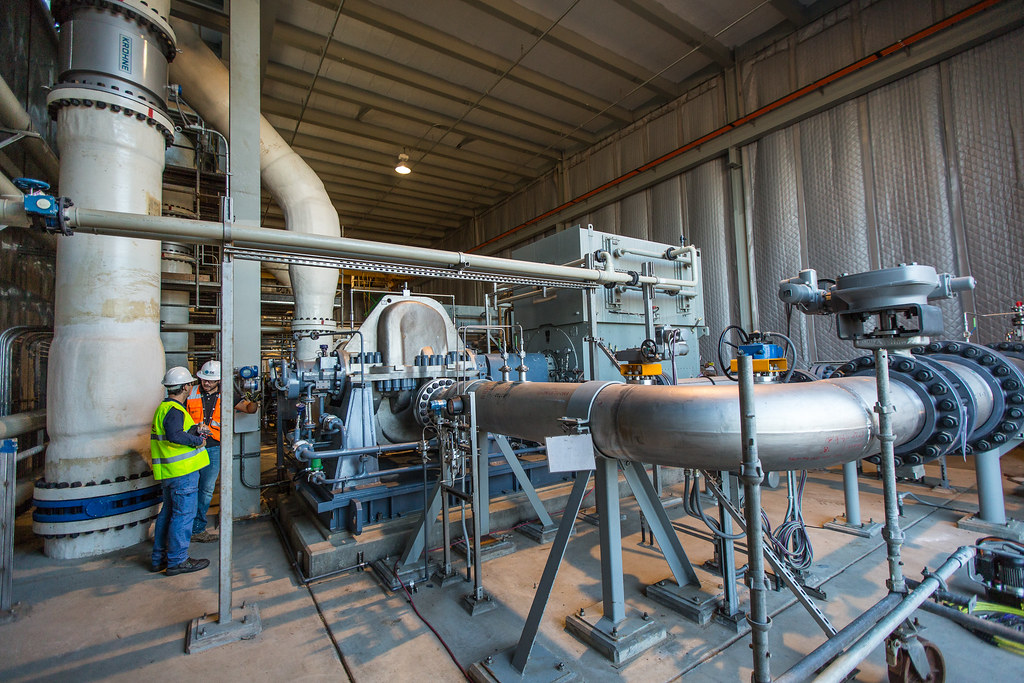
Reverse osmosis works by pushing water – under intense pressure – through semi-permeable membranes to remove dissolved salts and other impurities. These membranes act like microscopic strainers that allow only water molecules to pass through, leaving behind the salt, minerals and other impurities such as bacteria and viruses. In addition to the reverse osmosis membranes and pressure vessels, this building houses 144 state-of-the-art energy recovery devices produced by Energy Recovery, Inc. The energy recovery devices work by capturing the hydraulic energy created by the high-pressure reject stream of seawater produced during the reverse osmosis processes and transferring it into incoming seawater, without consuming any electrical power themselves.
These devices save the plant an estimated 146 million kilowatt-hours of energy per year, reducing carbon emissions by 42,000 metric tons annually – roughly equivalent to the annual greenhouse gas emissions from 9,000 passenger vehicles.
03.
04.
Post Treatment
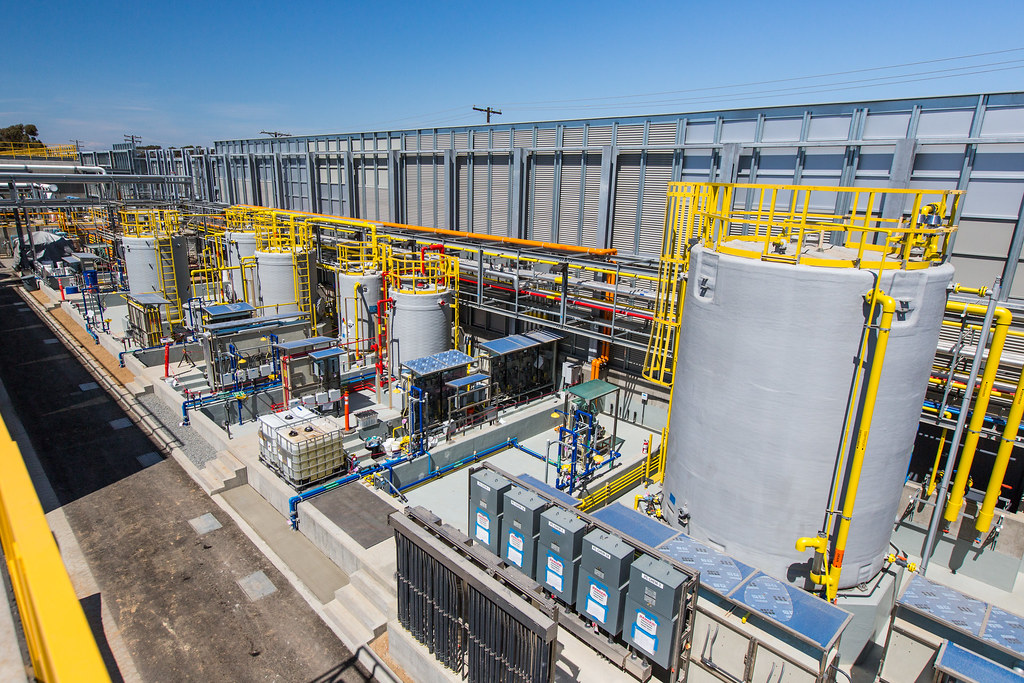
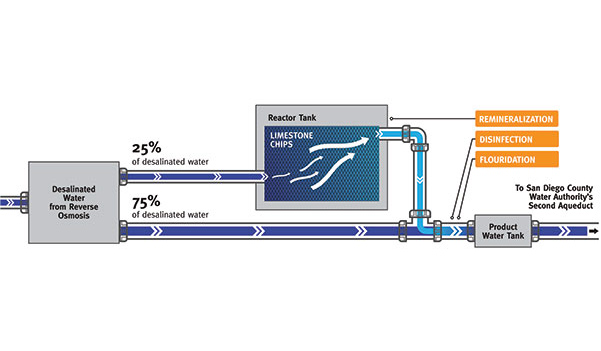
After reverse osmosis filtration, fresh water is nearly ready for consumption. But before making its way to your faucet, the water must undergo “post treatment.” This includes adding some minerals back into the water and disinfecting it with chlorine.
Product Water Storage
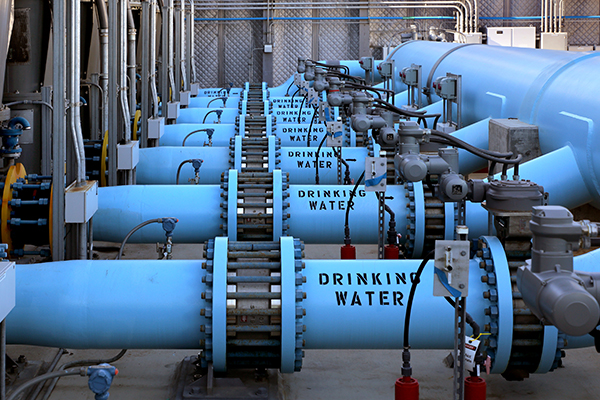
Once the desalination process is complete, the water moves to the product water tanks, where it is then pumped 10 miles to the San Diego County Water Authority’s Second Aqueduct in San Marcos. Here, the water is blended with the regional supply and transported to a faucet near you.
05.
Learn More About:
Safety & Reliabilty
Continuous monitoring and expert operations keep water clean, consistent, and dependable every day.
Learn More
Capabilities
Advanced technology and innovation power the plant’s ability to deliver 50 million gallons of fresh water daily for San Diego County.
Learn More
Sustainability
Efficient systems and environmental stewardship ensure clean water production that protects local habitats and resources.
Learn More